Choosing the right cabinet hinges ensures that your cabinets not only look great but also function seamlessly and provide long-lasting durability. Having the appropriate hinges for your specific cabinet prevents doors from sagging or misaligning over time, ensuring that they open and close smoothly.
Selecting the right hinge for your cabinets isn’t as simple as picking one off the shelf. There are numerous types to choose from, each with its own set of features. Having a wide range of options can make it confusing to determine which one is the correct choice for your cabinet. It’s always recommended to confirm with your nearest cabinet makers.
The key to finding the right hinge is to familiarize yourself with each type’s features and how they match your cabinet’s requirements. Here are some considerations to keep in mind from cabinet professionals:
- Your Cabinet Style: The style of your cabinets will influence which hinges will work best. Frameless cabinets require hinges that are different from framed ones. You also need to consider whether you have overlay or inset doors, as they require different hinges.
- Visible Vs. Concealed: Consider whether you want the hinges to be seen. Concealed hinges keep a streamlined look, whereas visible hinges can add a decorative detail to your cabinet.
- Self-Closing Vs. Soft-Closing: Self-closing hinges are great for keeping doors closed, but soft-closing hinges are more quiet and prevent those annoying slamming sounds.
- Door Thickness & Weight: The thickness and weight of your cabinet doors are crucial. Heavier doors need heavy-duty hinges to function properly.
- Durability & Quality: Choose hinges made from durable materials. High-quality hinges ensure your cabinets remain functional and attractive over time.
Different Types of Kitchen Cabinet Hinges
Your cabinet doors will not function properly without the correct hinges. The type of hinge you choose can affect the stability, range of motion, and appearance of the cabinets. Here are some commonly used cabinet hinges:
Butt Hinges
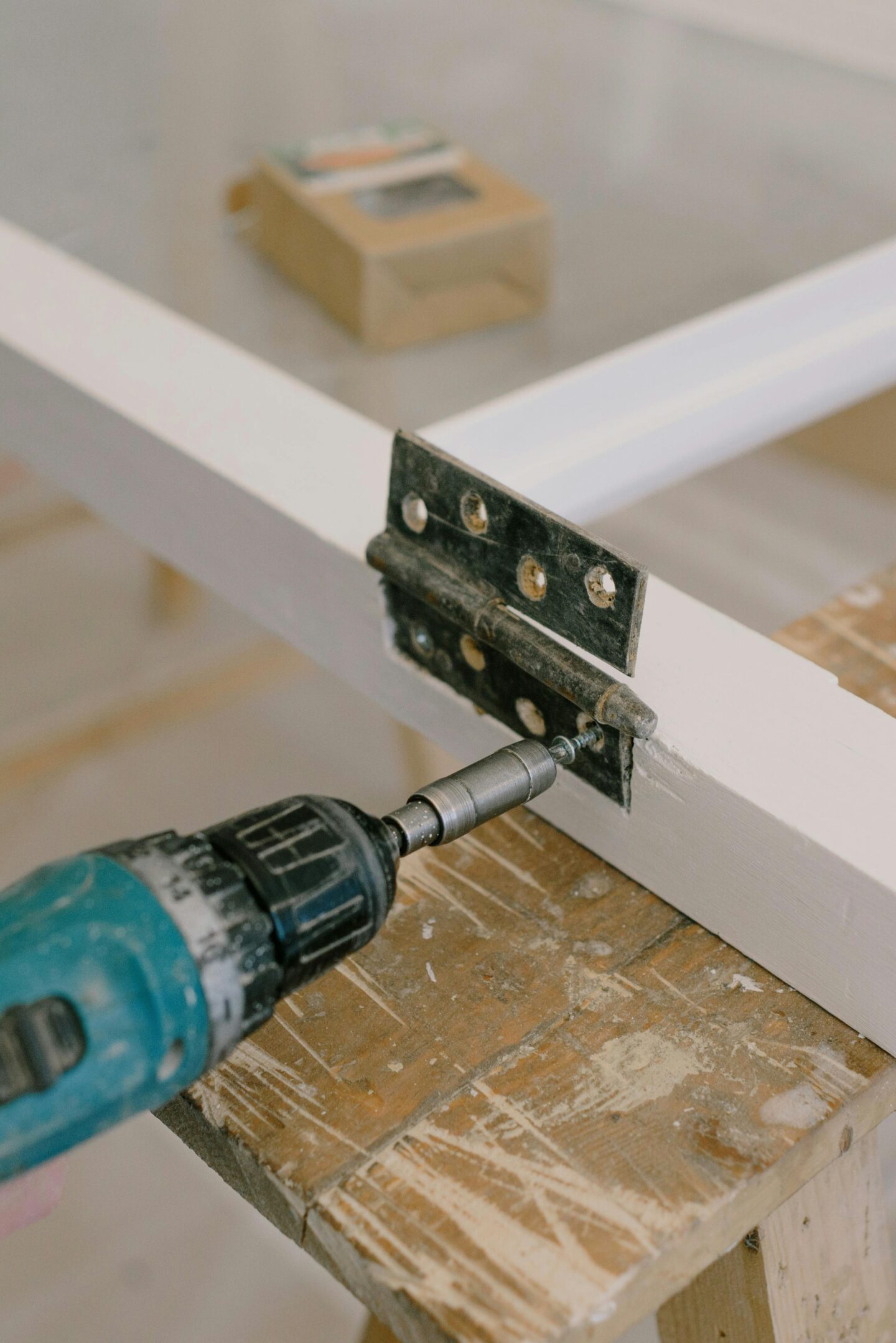
Butt hinges are commonly used on traditional cabinets due to their classic appearance. It features two rectangular plates connected by a central pin. One plate is affixed to the cabinet door and the other to the frame, providing strong support and a timeless aesthetic.
Known for their strength, butt hinges are better suited for heavier cabinet doors compared to other hinges. This is due to their larger knuckle, which serves as the bearing connecting the two leaves. The substantial size of the knuckle provides enhanced support, making butt hinges perfect for weightier applications.
European Hinges (Concealed Hinges)
European hinges, also known as concealed hinges, are hinges that remain hidden when the cabinet door is closed, offering a sleek and seamless look to your cabinets. European hinges offer three-way adjustment (up/down, left/right, in/out), allowing for perfect door alignment even after installation.
This type of hinge can be used for the following cabinet types:
- Frameless Cabinets
- Full Overlay Cabinets
- Inset Cabinets
- Partial Overlay Cabinets
Overlay Hinges
Overlay hinges attach the cabinet door to the frame or box, allowing the door to cover the cabinet opening. These hinges are often used when the door overlays the cabinet’s face frame or box, whether partially or fully. They come in styles like partial overlay and full overlay, depending on the desired coverage.
Overlay hinges are particularly suitable for:
- Frameless Cabinets
- Face Frame Cabinets
- Full Overlay Cabinets
- Partial Overlay Cabinets
Inset Hinges
Inset hinges are designed to ensure that cabinet doors sit flush with the cabinet frame when closed. This allows the door to fit precisely within the cabinet opening, resulting in a smooth, even surface. Depending on the design, inset hinges can be visible or hidden, and they are frequently selected for their classic, clean appearance.
Inset hinges are usually used for the following cabinet types:
- Inset Cabinets
- Traditional and Classic Designs
- High-End Custom Cabinetry
This type of cabinet hinge is usually more challenging to install compared to overlay hinges as it requires precise cutting and careful adjustment to ensure the door fits exactly within the cabinet frame.
Pivot Hinges
Pivot hinges enable cabinet doors to rotate around a pivot point at the top and bottom. Unlike traditional side-mounted hinges, pivot hinges are installed at the door’s ends, offering a different range of motion. These hinges are often chosen for specialty applications that require unconventional door movement.
This type of hinge is good for the following cabinet types:
- Corner Cabinets
- Tall Cabinets
- Specialty Cabinets
- Bi-Fold Doors
Pivot hinges are designed to handle heavier doors, providing strong support from both the top and bottom, which reduces the stress on the door and frame.
Soft-Close Hinges
Soft-close hinges are designed with a mechanism that slows the door as it closes, preventing it from slamming. This system, usually hydraulic or dampening, controls the door’s closing speed, ensuring it shuts quietly and smoothly.
By reducing the impact of door closures, soft-close hinges help extend the life of the cabinets and hinges themselves.
Closing Thoughts
Although cabinet hinges may seem insignificant, they are essential to both the practical use and the visual appeal of your cabinets. By carefully considering your options, you can select the hinges that best meet your needs and preferences, ensuring your cabinets are both functional and stylish.
If you are unsure of what type of hinge you should choose, getting help from experienced professionals is always an option.
Thank you for reading.