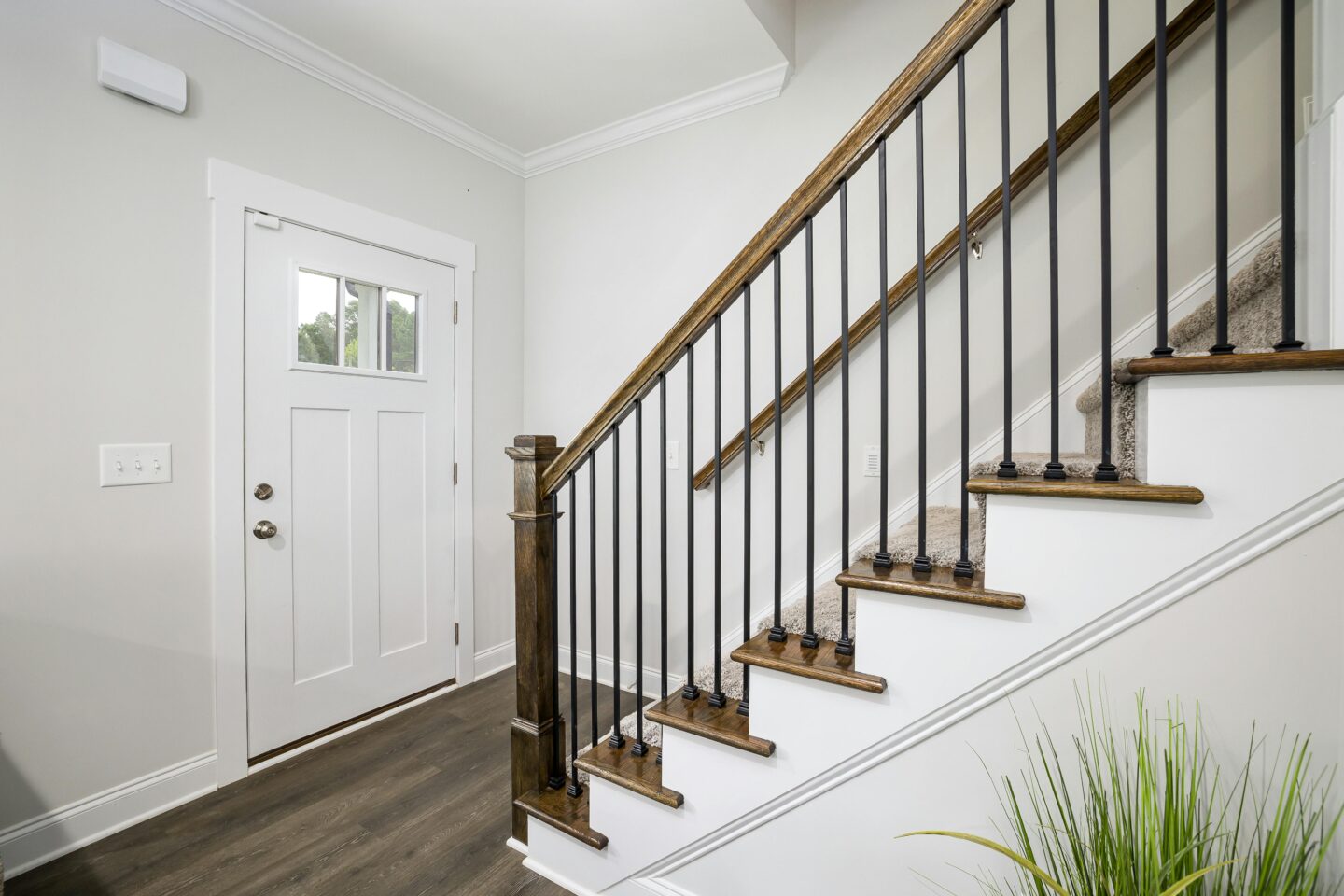
Stairs are already a feature in any home, but when it comes to spiral or curved staircases, the visual impact can be truly impressive. However, with these elegant shapes comes a challenge, what type of skirting board can actually work with such unique angles and curves?
Standard MDF or timber skirting doesn’t bend easily. If you’re trying to fit it along a curved stairwell, you’ll likely find yourself battling with gaps, cracking, or unsightly joints. This is where flexible skirting boards come into their own. In this guide, we’ll look at the best type of skirting for spiral and curved stairs, what to consider when choosing it, and how to get a clean, professional finish.
Why Curved and Spiral Stairs Need Special Skirting
Unlike straight staircases, spiral and curved designs don’t follow a linear path. Their geometry includes continuous curves or sharp bends that require your skirting to match in order to protect walls and complete the look.
Traditional skirting boards are rigid. That means they’re not suited for following the twist of a spiral or the arc of a curved staircase. Trying to force standard skirting into position can lead to splitting, poor adhesion, and an uneven appearance.
The Best Solution: Flexible Skirting Boards
Flexible skirting, sometimes referred to as bendy or curved skirting, is designed to solve exactly this problem. It’s made from materials like flexible MDF or polyurethane, which can bend and mould to non-linear surfaces without losing shape or structure.
These skirting boards can be curved by hand or using gentle pressure, which makes them ideal for:
- Spiral staircases
- Curved stairwells
- Rounded walls
- Semi-circular landings
You still get the same visual finish as traditional timber skirting, but with the added bonus that it won’t crack, warp or separate under stress.
Popular Skirting Profiles That Work Well in Curves
Flexible skirting is available in a wide range of profiles, so it’s easy to match the existing décor in your home. Some popular choices include:
- Torus: A rounded, traditional profile that suits period properties and works well with curves.
- Bullnose: A smooth, modern style that bends evenly around tight corners.
- Chamfered: Clean angles give a subtle modern edge without being overpowering.
- Ogee: Ideal for older homes and a decorative touch that still bends with flexibility.
The key is to check that the profile you choose is available in a flexible format. Some high-street or DIY suppliers don’t stock flexible variants, so it’s worth using a specialist skirting supplier.
Key Benefits of Using Flexible Skirting for Spiral and Curved Stairs
- No Visible Gaps or Joints
When you bend flexible skirting around a staircase, it hugs the shape of the wall. That means no large mitres, filler gaps or awkward corners. - Easier and Faster to Install
You won’t need to spend hours cutting small sections or battling with fiddly angles. Flexible skirting usually comes in longer lengths that simply follow the curve as you install. - Consistent Style Throughout the Home
If you already have a particular skirting profile on other floors, using the flexible version of that same design helps maintain a cohesive interior finish. - Durability and Wall Protection
Even though it bends, flexible skirting is still strong enough to protect plasterwork from daily knocks and wear and tear—especially important on stairwells.

Installation Tips for Curved Stair Skirting
Installing flexible skirting on spiral stairs takes care and patience, but the process isn’t overly complex. Here are a few tips to ensure a smooth fit:
- Prepare the Area
Make sure the wall surface is clean, dry and free from dust. Use a string line or flexible ruler to mark out your fixing line along the curve. - Acclimatise the Skirting
Leave the flexible skirting in the room for 24–48 hours before fitting. This helps it adjust to the temperature and bend more naturally. - Use the Right Adhesive
Strong grab adhesive is usually enough, but for steep curves, you may want to secure the skirting with small pins or temporary fixings while the glue sets. - Apply Even Pressure
Gently mould the skirting around the curve as you go. It’s best to have a second person assist on long spirals or steep gradients. - Finishing Touches
Once set, use the decorator’s caulk to seal the top edge and fill any small imperfections before painting.
What If You Need to Match Existing Skirting?
Many homes feature a mix of straight and curved walls. If your skirting needs to match an existing profile that doesn’t come in a flexible option, don’t panic.
Some suppliers can replicate bespoke profiles in flexible materials. You may need to send a sample or choose the closest match from a profile chart. Either way, you can achieve a near-identical look around your stairs, landing and hallway.
Cost Considerations
Flexible skirting is generally more expensive per metre than standard MDF. This is due to the specialised materials and manufacturing process required to give it bendability without losing structure.
However, the labour costs you save in fitting, along with the better visual finish, often outweigh the upfront expense, especially in high-traffic or feature areas like stairs.
Final Thoughts
Spiral and curved staircases are a beautiful feature in any property, but they do present challenges when it comes to skirting. Rather than force straight lengths to do a job they weren’t designed for, flexible skirting offers a purpose-built solution.
It’s easier to install, delivers a more seamless finish, and allows you to maintain your design theme throughout the home. Whether you’re renovating a period property or adding a modern spiral staircase to a new build, the right skirting makes all the difference to the final look.
Thank you for reading.







