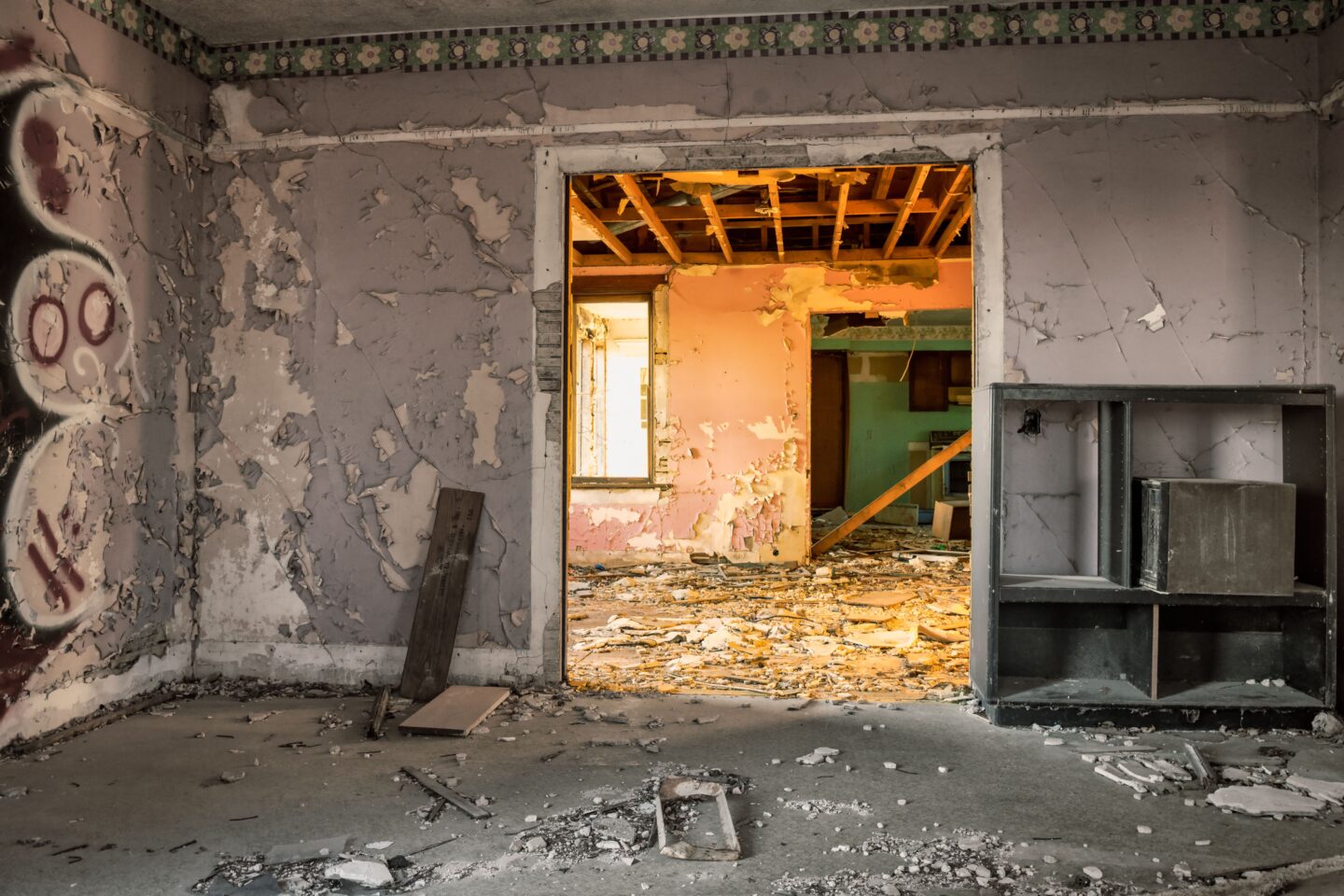
Empty homes can be appealing. You might see boarded-up windows and an overgrown garden and imagine what the property could become once renovated. There is an opportunity to create a home and potentially add value to a building that has been neglected for years.
However, buying a derelict property comes with significant risks. Successful projects depend less on having a great vision and more on understanding the condition of the property, accurately estimating costs and having a plan if things go wrong.
What “Derelict” Actually Means for Your Purchase
There is no single legal definition of a derelict property, so it is important to understand exactly what you are buying:
- Long-empty but sound: The property may have been empty for years and have problems such as damp, but the main structure is still sound. This is usually a refurbishment project.
- Genuinely derelict: The roof may have failed, water may have entered the building and timber could be rotten. There may also be movement in the walls. This is closer to a construction project than a normal renovation.
- Uninhabitable in a lender’s eyes: The property may have no working kitchen, bathroom or essential services, or its condition may be too poor for a surveyor to approve.
The last category can make financing difficult. Many mainstream mortgage lenders will not lend on a property without a working kitchen and bathroom.
You may therefore need cash, bridging finance or a specialist refurbishment loan. Bridging finance can be expensive, particularly if work takes longer than expected. Confirm how you will fund both the purchase and renovation before making an offer.
Do the Legal Digging Before You Fall in Love
Properties can remain empty for many reasons, and the biggest problem may be hidden in the paperwork rather than the building.
Ask your solicitor to investigate the title carefully. Possible issues include delayed probate, unknown owners, unregistered land, restrictive covenants, absent freeholders and old lender charges. There may also be enforcement notices or other action already affecting the property.
Check with the local authority for:
- Listed status or conservation areas: These can restrict which materials, windows and roof coverings you can use.
- Planning history: Previous refusals can show what the council is likely to accept.
- Residential use: In limited circumstances, residential use may be considered abandoned after a very long period of vacancy.
- Council tax premiums: Councils can charge higher council tax on homes that have been empty for long periods, and you may become responsible after completion.
Understanding these issues before buying can prevent expensive surprises later.
Survey It Properly
A mortgage valuation is not a building survey. Even a Level 3 survey may have limitations if areas of a derelict building are unsafe or inaccessible.
Arrange a detailed structural inspection and consider specialist reports covering timber and damp, drainage, electrics, gas, asbestos and Japanese knotweed where appropriate.
You should also consider the accuracy of the property’s existing plans. Neglected buildings often have no reliable drawings, particularly if alterations have been made over many years.
Without accurate plans, architects may struggle to design improvements and contractors may have difficulty providing reliable quotes.
A measured building survey records the property as it actually stands. Laser scanning can capture uneven walls, sagging floors, sloping ceilings and other details before producing accurate plans, elevations and sections.
These drawings give architects and contractors reliable information to work from. This can improve the accuracy of quotes and reduce the risk of expensive changes during construction.
Take Safety Seriously From the First Visit
A derelict building can be dangerous before work even begins. Floors and stairs may be rotten, ceilings can collapse because of water damage, and there may be live electrical services, asbestos or other hazards.
Avoid inspecting unsafe buildings alone and do not enter areas where the condition of the structure is unknown.
Roof work requires particular care. Falls remain one of the main causes of workplace fatalities in UK construction. Derelict roofs can be especially dangerous because the condition of the timber may be unknown and proper edge protection may not exist.
If you or anyone working on the project will access roofs, use scaffolding or work from ladders, suitable working at height training is important. It covers areas such as safe access, equipment selection and inspection, fall protection and reducing risks.
Other precautions may include properly installed scaffolding, temporary sheeting to prevent further water damage and understanding your CDM responsibilities if you are managing the project.
Insurance is another important consideration. Standard buildings insurance often does not cover empty or derelict properties. You may need specialist unoccupied property insurance, which can include conditions relating to inspections and site security.

Build a Realistic Budget
Your budget should be based on surveys, drawings and detailed contractor quotes rather than a simple cost-per-square-metre estimate.
Remember to include:
- Contingency of 20 to 25%: Unexpected problems are common in neglected buildings. A contingency gives you money to deal with issues such as damaged walls or hidden structural problems.
- Holding costs: Include finance interest, insurance, council tax, security and standing charges for the full project period, including possible delays.
- Professional and statutory fees: Allow for architects, structural engineers, surveys, planning applications, building control and party wall matters.
- Purchase and exit costs: Include Stamp Duty Land Tax, legal fees, estate agent fees and any early repayment charges.
There can also be VAT benefits when renovating an empty property. Certain renovation works on a dwelling that has been empty for at least two years may qualify for a reduced 5% VAT rate. Different rules can apply to properties that have been empty for ten years or more.
Keep evidence showing how long the property has been empty and seek professional advice before work starts. VAT relief depends on the circumstances and the correct rate being applied.
Know Your Exit Before You Start
Before buying, consider what you will do if the project stops making financial sense.
A structural survey could reveal more damage than expected. Planning permission may be refused, construction costs could increase or bridging finance may approach the end of its term before the work is finished. Personal circumstances can also change.
Continuing with an unprofitable project simply because you have already spent money on it can make the situation worse.
Selling an unfinished or unmortgageable property through the normal market can also be difficult. Many buyers depend on mortgage finance, which may not be available if the property is not habitable.
If you need a quicker sale, one option is a house cash buyer that can buy the property in its current condition without depending on a mortgage or property chain.
This will usually mean accepting a lower price than you might achieve through a conventional open-market sale. In return, you may receive greater certainty over the sale and timescale.
Whether that trade-off makes sense depends on your circumstances. Compare the potential reduction in sale price with the cost of continuing to hold and finance the property for several more months.
Thinking about your exit before buying means you can make that decision based on figures rather than pressure.
Final Thoughts
Derelict property projects can offer genuine opportunities, but they reward careful planning.
Problems often arise when buyers become attached to a property before understanding its condition, underestimate renovation costs or fail to consider what they will do if the project becomes unprofitable.
A safer approach is to investigate first and commit later.
Have your solicitor check the legal position before buying. Commission proper surveys and accurate drawings before contractors provide quotes. Make sure the property can be accessed and worked on safely. Build contingency and holding costs into your budget, and decide in advance when you would walk away or sell.
These steps may not be the most exciting part of bringing an empty property back to life, but they can make the difference between a successful renovation and an expensive project that becomes increasingly difficult to finish.
Thank you for reading.