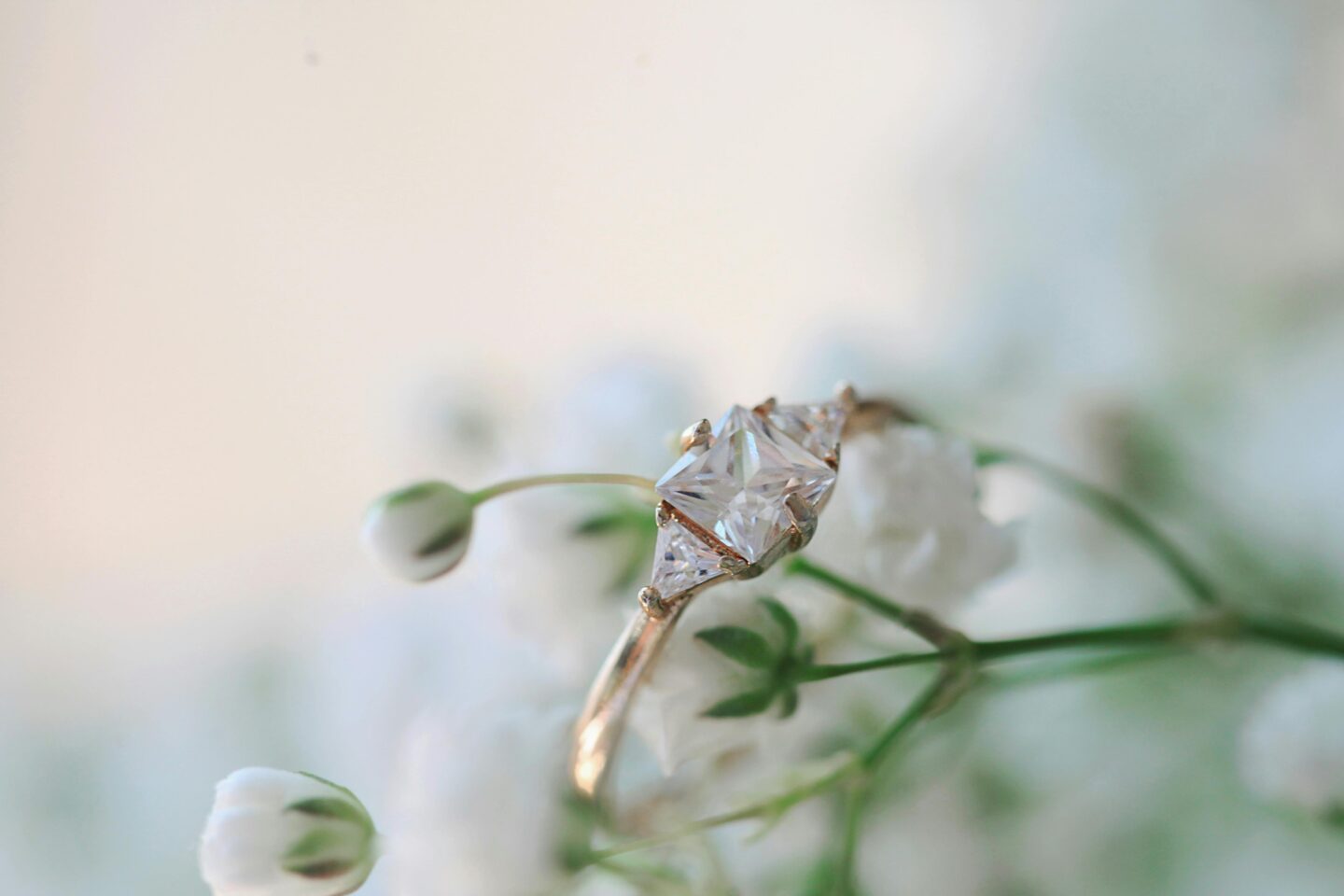
When you slip an engagement ring onto someone’s finger, you’re following a tradition that stretches back over time. That small circle of metal has carried many meanings over the years – sometimes it’s been a contract, sometimes a declaration of love. Often both.
If you’ve always wanted to know the history of the engagement ring, check out this guide. You can see not just the evolution of design, but also the way people expressed love and loyalty.
Origins and symbolism
Engagement rings were prevalent in ancient times. Although they were used in Egypt or Greece, it was ancient Rome where these engagement rings acted as a visible contract.
When you gave a ring, you declared your intention to marry, binding yourself in both love and law. Early rings were often made of simple iron bands, which were both durable and enduring. Wealthier Romans sometimes chose gold, while others wore bronze or copper.
Over time, engravings and carved details added layers of meaning, turning what began as a token of legal agreement into something with personal meaning. Rings reminded couples of promises and connected them to the traditions of family and society.
The Renaissance
The Renaissance sparked a transformation in how people viewed jewellery. As art and science flourished, so too did the craft of gem cutting.
Diamonds, once considered rare, began to shine as the stone of choice for the wealthy. In 1477, Archduke Maximilian of Austria famously gave Mary of Burgundy a diamond ring, setting the standard for love declarations.
European nobility quickly embraced this, and diamonds became the most popular gem to propose with. When you picture a diamond ring today, you see the continuation of that fashion. During this period, diamonds symbolised not only love but also power and prestige.
The Victorian era
By the 19th century, love stories took centre stage. Queen Victoria’s devotion to Prince Albert influenced jewellery design across Britain and beyond.
Engagement rings from this period often featured romantic motifs. Hearts, flowers and serpents adorned pieces. In fact, Prince Albert gifted Victoria with an 18-carat gold serpent engagement ring that wrapped around the finger and featured rubies, diamonds and an emerald.
This meant that coloured gemstones such as sapphires, emeralds and garnets became popular, while engravings personalised each piece with initials, dates or secret messages. This was jewellery that blended artistry with sentiment.
Modern trends
Today, engagement rings reflect both tradition and personal expression. Many couples choose mixed-metal bands or experiment with unconventional stones, from moissanite to coloured diamonds. You might see rings shaped with minimalist lines or bold vintage-inspired settings, depending on taste. Ethical sourcing has also become a key factor, with increasing demand for conflict-free diamonds and recycled metals.
Whether you want a Victorian ring adorned with gems and serpents or something more modern, there are rings available now to suit a range of tastes and styles.
Thank you for reading.








Interesting read! Loved seeing how styles evolved.