
It’s 7:42 a.m. One kid can’t find their left shoe. Another has decided this is the morning to explain, in full detail, why they no longer like toast. You have 11 minutes before you need to be in the car, and everyone still needs to eat something. This is the breakfast reality for most families on most mornings, and a bowl of cereal or a cereal bar feels like the only realistic option.
The problem with that shortcut is that it tends to fall apart by 10 a.m. Low-protein, high-carb breakfasts spike blood sugar quickly and drop it just as fast, which means a hungry, distracted kid sitting in third period and a parent who’s already raiding the snack drawer before their first meeting is over. High-protein breakfasts change that pattern. They slow digestion, stabilize blood sugar, and keep everyone fuller and more focused for longer. Better still, most of the recipes that deliver real protein don’t require a culinary degree or an extra 30 minutes you don’t have.
Why Protein at Breakfast Makes a Difference for the Whole Family
Protein slows the absorption of glucose into the bloodstream, which prevents the spike-and-crash cycle that makes kids fidgety and adults foggy by mid-morning. A 2013 study published in the American Journal of Clinical Nutrition found that adolescents who ate a high-protein breakfast reported greater satiety and reduced evening snacking compared to those who ate a normal-protein breakfast or skipped the meal entirely.
The focus benefits are real too. Protein provides amino acids that support neurotransmitter production, including dopamine and norepinephrine, both of which play a role in attention and motivation. For school-age kids and adults who need to concentrate through long meetings or morning lessons, that matters.
As for how much protein you’re actually aiming for: most school-age children do well with 15 to 20 grams at breakfast, while adults generally benefit from 25 to 35 grams to sustain satiety through the morning. None of these recipes require you to do math at 7 a.m., but it’s useful context for understanding why they work.
Recipe 1: 5-Minute Greek Yogurt Parfaits with Granola and Berries
Greek yogurt is one of the most underrated breakfast ingredients for families. A single cup of full-fat Greek yogurt delivers around 17 to 20 grams of protein, it requires zero cooking, and most kids are happy to eat it when it looks like dessert.
Layer full-fat Greek yogurt with a handful of mixed berries and a scoop of store-bought granola. That’s it. For older kids or adults who need a bigger protein hit, add a tablespoon of chia seeds or a small handful of walnuts to the top. The seeds add about 3 grams of protein per tablespoon along with omega-3s, and they’re small enough that even particular eaters rarely notice them.
The real time-saver here: portion the yogurt into small mason jars the night before and store them in the fridge. In the morning, each person grabs a jar and adds their own toppings. Kids who feel like they made their own breakfast tend to actually eat it.
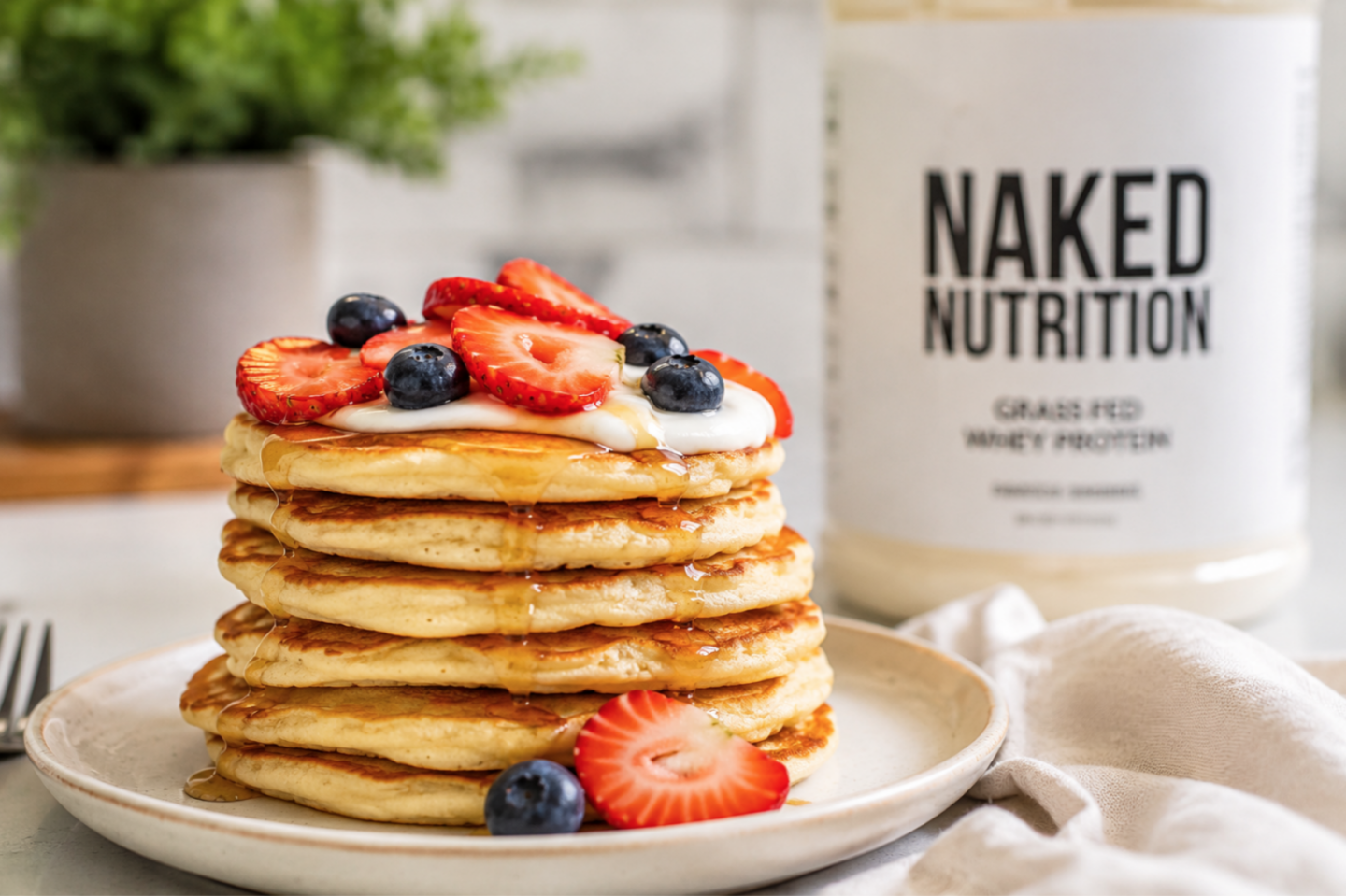
Recipe 2: Fluffy High-Protein Pancakes the Whole Family Will Request Every Weekend
Weekend pancakes are a tradition in most households. This version keeps everything they love about them and quietly adds enough protein to make them a legitimate breakfast rather than a Saturday indulgence.
The base is simple: blend rolled oats, two eggs, one ripe banana, a splash of milk, and a scoop of grass fed whey protein powder until smooth, then cook on a nonstick pan as you normally would. The banana and oats give the batter enough body that the texture stays fluffy rather than dense, and the protein powder blends in completely. One serving delivers 20 or more grams of protein before you’ve added a single topping. Most kids cannot tell the difference from a standard pancake mix.
Make a double batch on Sunday. Pancakes refrigerate well for three days and freeze well for up to a month. Stack them between sheets of parchment paper, seal in a freezer bag, and reheat straight from frozen in a toaster or microwave on a weekday morning when time is short.
How to Customize the Toppings to Keep Picky Eaters Happy
Set out a small topping bar and let everyone build their own plate. Sliced strawberries, blueberries, banana coins, a drizzle of honey, a spoonful of almond butter, or a light sprinkle of chocolate chips all work. Giving kids control over the toppings tends to reduce the negotiation around what’s underneath them.
Recipe 3: Sheet Pan Egg and Veggie Bake for the Whole Week
This is the recipe that requires the most effort upfront and the least effort every other morning. Spend 15 minutes on Sunday, bake once, and you have a week of ready-to-go breakfasts.
Whisk 12 eggs with a splash of milk, salt, and pepper. Fold in diced bell peppers, a handful of baby spinach, and shredded cheddar. Pour into a parchment-lined sheet pan and bake at 350°F for 20 to 25 minutes, until set in the center. Once cooled, cut into squares and store in an airtight container in the refrigerator.
Each square has roughly 8 to 10 grams of protein depending on size, so two squares alongside a piece of fruit makes a complete, satisfying breakfast. You can customize the filling for different family members by dividing the pan before baking: meat on one half, vegetarian on the other.
To reheat without rubbery texture, use 60 percent power in the microwave for 60 to 90 seconds rather than blasting it on high. The lower heat keeps the eggs soft.
Recipe 4: Peanut Butter Banana Smoothie Packs
Smoothies are fast, but the prep isn’t. Measuring and chopping in the morning adds time most families don’t have. The fix is to do all of that work once a week.
Portion one banana (sliced), one tablespoon of natural peanut butter, and half a cup of Greek yogurt into individual freezer bags. Seal and freeze. In the morning, empty one bag into the blender, add a cup of milk, and blend for 60 seconds. The frozen ingredients eliminate the need for ice, and the whole process takes under two minutes.
The peanut butter, yogurt, and milk combination delivers around 18 to 22 grams of protein per serving. If you want to sneak in extra nutrition, add a handful of fresh spinach or a teaspoon of chia seeds before blending. The banana and peanut butter flavors are strong enough to cover both completely.
Recipe 5: Savory Breakfast Burritos You Can Freeze by the Dozen
A grab-and-go breakfast that a five-year-old can eat in the backseat without creating a disaster is genuinely useful. These burritos deliver that.
Scramble a dozen eggs and combine with canned black beans (rinsed and drained), shredded rotisserie chicken, and shredded cheese. Spoon the filling down the center of whole wheat tortillas, roll tightly, and wrap each burrito individually. A double batch takes about 45 minutes on a Sunday and produces two weeks of breakfasts. Each burrito clocks in at around 25 grams of protein.
Reheat straight from frozen: wrap the burrito in a damp paper towel and microwave for 2 to 3 minutes, flipping once halfway through. The damp towel is the key step. It steams the tortilla rather than drying it out, so the texture stays soft.
Freezer-Friendly Wrapping Tips to Prevent Freezer Burn
Wrap each burrito first in a layer of plastic wrap, then in foil. The plastic wrap creates a seal against moisture loss, and the foil protects against temperature fluctuations in the freezer. Label each one with a date using a piece of masking tape. Burritos stay good for up to three months, though they rarely last that long.
FAQ
Can I make these recipes if my kids have dairy allergies?
Yes, with a few swaps. Use coconut yogurt in the parfaits and smoothie packs, dairy-free milk in the pancakes and smoothies, and skip the cheese in the egg bake and burritos (or use a dairy-free shredded cheese). The protein content will be slightly lower in some recipes, but the overall structure holds.
How do I get enough protein in the morning without eggs or dairy?
Legumes are your best tool. Black beans in the burritos, nut butters in the smoothies, and hemp seeds or chia seeds added to the parfaits or pancakes all contribute meaningfully. A breakfast with beans, seeds, and whole grain tortillas can hit 20 grams without any animal protein.
At what age can kids start eating high-protein breakfasts like these?
All of these recipes are appropriate for children over 12 months with minor adjustments, such as cutting burritos into small pieces for toddlers and checking that nut butters are introduced appropriately based on your pediatrician’s guidance. Protein needs per kilogram of body weight are actually higher in young children than in adults, so starting early is worthwhile.
Pick one of these recipes to try this week. Not all five, just one. If you make a batch of sheet pan eggs on Sunday and it actually saves you 10 minutes on Monday morning, that’s a win worth repeating. These kinds of small, consistent changes add up faster than most people expect. A kid who eats a solid breakfast every day for a school year sits through a lot more mornings without hitting a wall at 10 a.m.
Thank you for reading.







