Why does traditional interior design continue to captivate homeowners in our fast-paced, modern world? It all comes down to character. Combining the warmth of historical craftsmanship with clean, contemporary lines transforms a simple room for sleeping into a deeply personal, restorative sanctuary.
Blending traditional decor with modern elements—often called transitional style by interior designers—is an art form rooted in balance. Whether you are drawn to classic antiques, flea-market finds, or sleek modern furniture, the goal is to curate a space that celebrates the best of both worlds without feeling like a museum or a clinical showroom.
- Understanding Traditional Modern (Transitional) Bedroom Design
Traditional interior design draws its roots from 18th and 19th-century European architecture, focusing on symmetry, visual order, and enduring craftsmanship. At its core, the aesthetic relies on rich timber tones, structured mouldings, and tactile layers that impart a sense of quiet formality.
| The Transitional Hybrid | Design Features & Adaptations |
|---|---|
| Traditional Elements | • Symmetrical layouts & wall panelling
• Antique timber furniture & brass hardware • Full-length drapes & tufted upholstery |
| Modern Adaptations | • Bolder, unexpected accent palettes
• Low-profile, sleek bed silhouettes • Streamlined lighting & hidden storage |
What makes contemporary traditional design so enduring is its adaptability. Rather than strictly recreating historical periods, it incorporates modern ergonomics and streamlined silhouettes. In a transitional bedroom:
- Architectural Features: White wall panelling, grand sash windows, and central fireplace surrounds provide a classic backdrop.
- Updated Comforts: Plush area rugs, low-profile bed frames, and extended tufted headboards introduce modern luxury without competing with historical character.
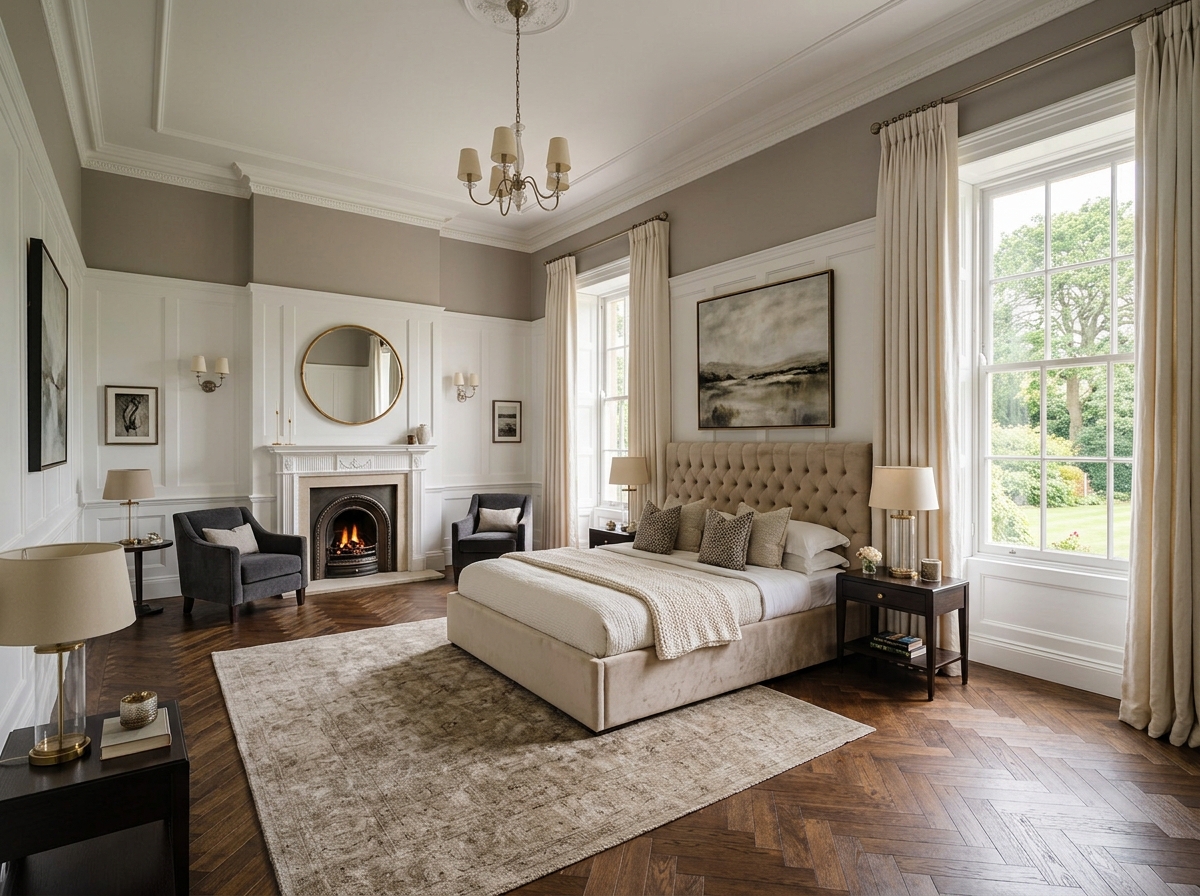
Pictured: Interior photograph of a grand transitional UK master bedroom suite. The walls feature crisp white timber panelling set against soft taupe paint above.
- Mathematical Rules of Design Balance
Achieving harmony between vintage decor and contemporary pieces relies on proven design ratios. Splitting a room’s furniture 50/50 between two eras often creates visual conflict; applying specific proportion rules maintains cohesion.
The 80/20 Rule for Furniture Selection
Interior architects frequently apply the 80/20 rule: dedicate 80% of the room’s visual footprint to one primary style (usually modern for functionality) and 20% to the secondary style (vintage or antique accent pieces).
- Example: A sleek contemporary bed and minimalist wardrobe (80%) paired with an 18th-century marble-topped chest of drawers and an antiqued brass mirror (20%).
| Palette Component | Proportion Ratio | Recommended Application |
|---|---|---|
| Primary Base | 60% of room visual area | Walls, ceiling, & large panelling (Taupe/Cream) |
| Secondary Tone | 30% of room visual area | Bed linens, window drapes, & primary rug |
| Accent Highlight | 10% of room visual area | Decorative cushions, art frames, brass |
Texture Layering & Visual Weight
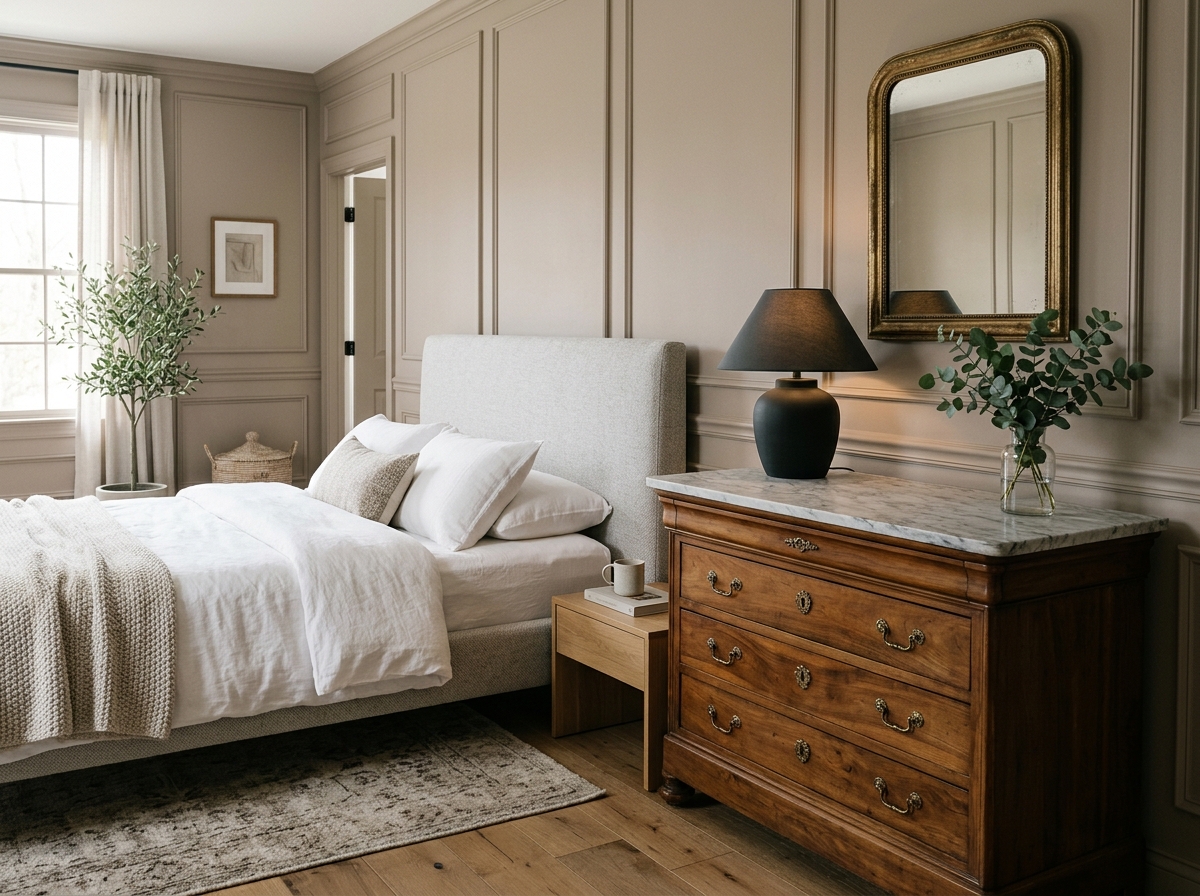
Pictured: Interior photograph showcasing the 80/20 design rule in the bedroom suite. Next to a sleek, contemporary upholstered bed dressed in crisp white linens stands a restored 19th-century French marble-topped chest of drawers.
To unify contrasting eras, balance the visual weight and surface texture of your furniture:
- Proportions: Pair items of similar height and scale. A substantial antique oak dresser needs a modern table lamp with sufficient volume so neither piece overpowers the other.
- Tactile Contrast: Balance rough, organic surfaces (reclaimed barn wood, tumbled stone, tumbled linen) with reflective, smooth finishes (polished marble, brushed chrome, or lacquered glass).

Pictured: A close-up interior detail photograph highlighting tactile materials and colour ratios on the bed setup. The wall behind displays soft taupe panelling (60% base). The bed is layered with a smooth slate-grey sateen duvet cover (30% secondary) and accented with a chunky mustard-yellow wool throw and a brushed-brass decorative cushion (10% accent).
- Curating Authenticity: Heirlooms, Vintage Finds & Biophilia
A transitional bedroom achieves its charm through personal stories and curated finds rather than store-bought sets.
| Curating Authenticity | Design Elements & Details |
|---|---|
| Personal Heirlooms & Antiques | • Antique clocks or inherited botanical prints
• Restored flea-market armchairs • Black-and-white family gallery walls |
| Biophilic & Lighting Touches | • Fiddle-leaf figs in aged terracotta pots
• Warm 2,700K brass wall sconces • Air-purifying greenery for air quality |
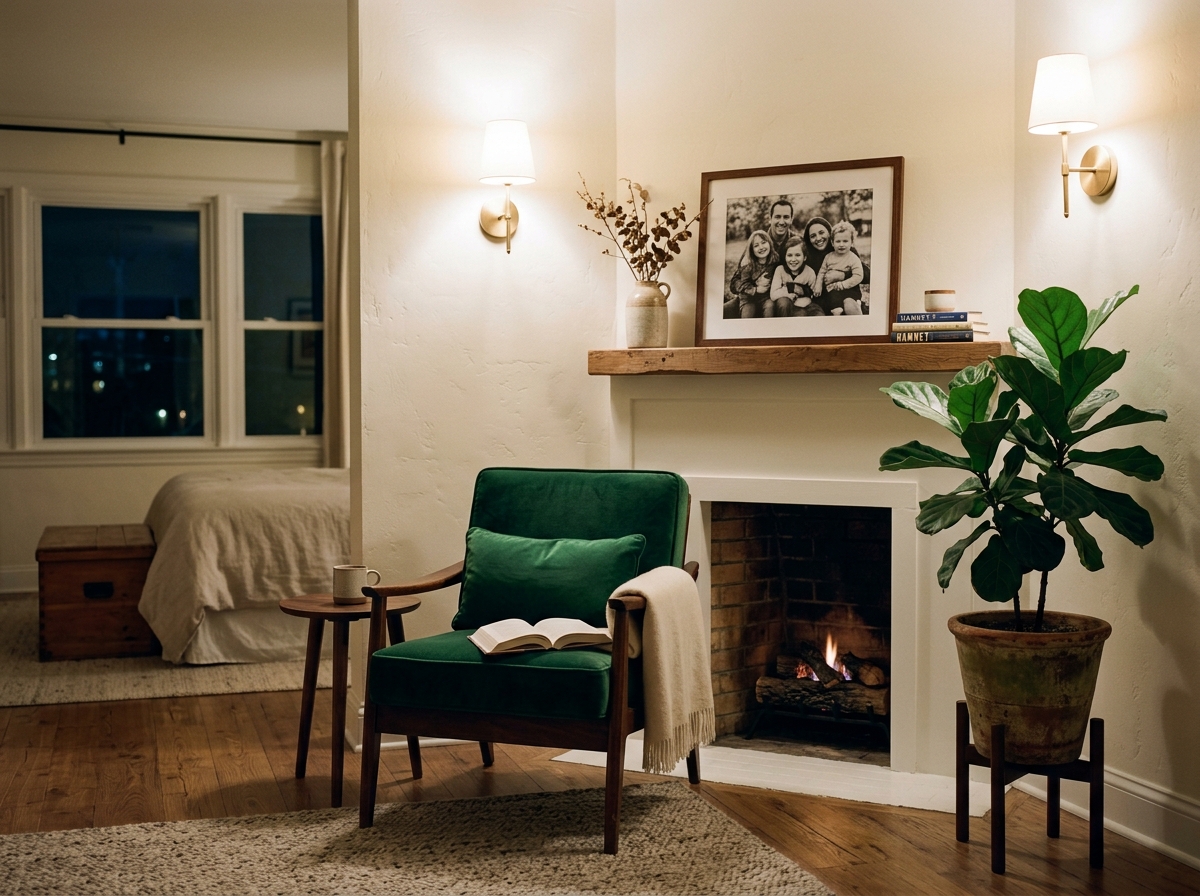
Pictured: An evening interior photograph capturing a cosy reading nook in the transitional bedroom. In the corner, a lush fiddle-leaf fig plant sits in an aged terracotta pot next to a restored vintage armchair fitted with a modern velvet cushion.
Incorporating Inherited Pieces and Vintage Art
- Family Heirlooms: Integrate inherited items—such as a vintage mantel clock, an antique French dresser, or framed botanical sketches—to add genuine patina and history.
- Framed Personal Photography: Display family photographs in uniform black-and-white prints using classic, upright brass or dark wood frames to bridge historical and modern styles.
Lighting & Biophilic Tip: Position a tall fiddle-leaf fig or monstera in an empty corner to introduce vibrant, air-purifying natural movement. Pair organic greenery with warm 2,700 K brass wall sconces mounted beside the bed or above the fireplace to cast a welcoming evening glow.
Conclusion: Creating Your Timeless Retreat
Traditional modern interior design gives you the creative freedom to curate a bedroom that tells your personal story. Design guidelines like the 80/20 rule and the 60-30-10 palette provide structural harmony, but your personal treasures bring the soul.
Start small: pair a contemporary bed with an antique side table, add brass sconces above a panelled wall, or style a vintage mirror above your dresser. By blending historical character with modern comfort, you can build a unique, enduring sanctuary that stands the test of time.
Thank you for reading.